Ovulation & the Fertile Window: How to Find Your Most Fertile Days
A practical guide to tracking fertile days (without guessing)
Whether you are trying to conceive or you simply want to understand your cycle, ovulation tracking is one of the most useful skills you can learn.
Ovulation is the moment your ovary releases an egg. That egg is available for a short time, but sperm can survive in the reproductive tract for several days. This is why the days leading up to ovulation matter just as much as ovulation day itself.
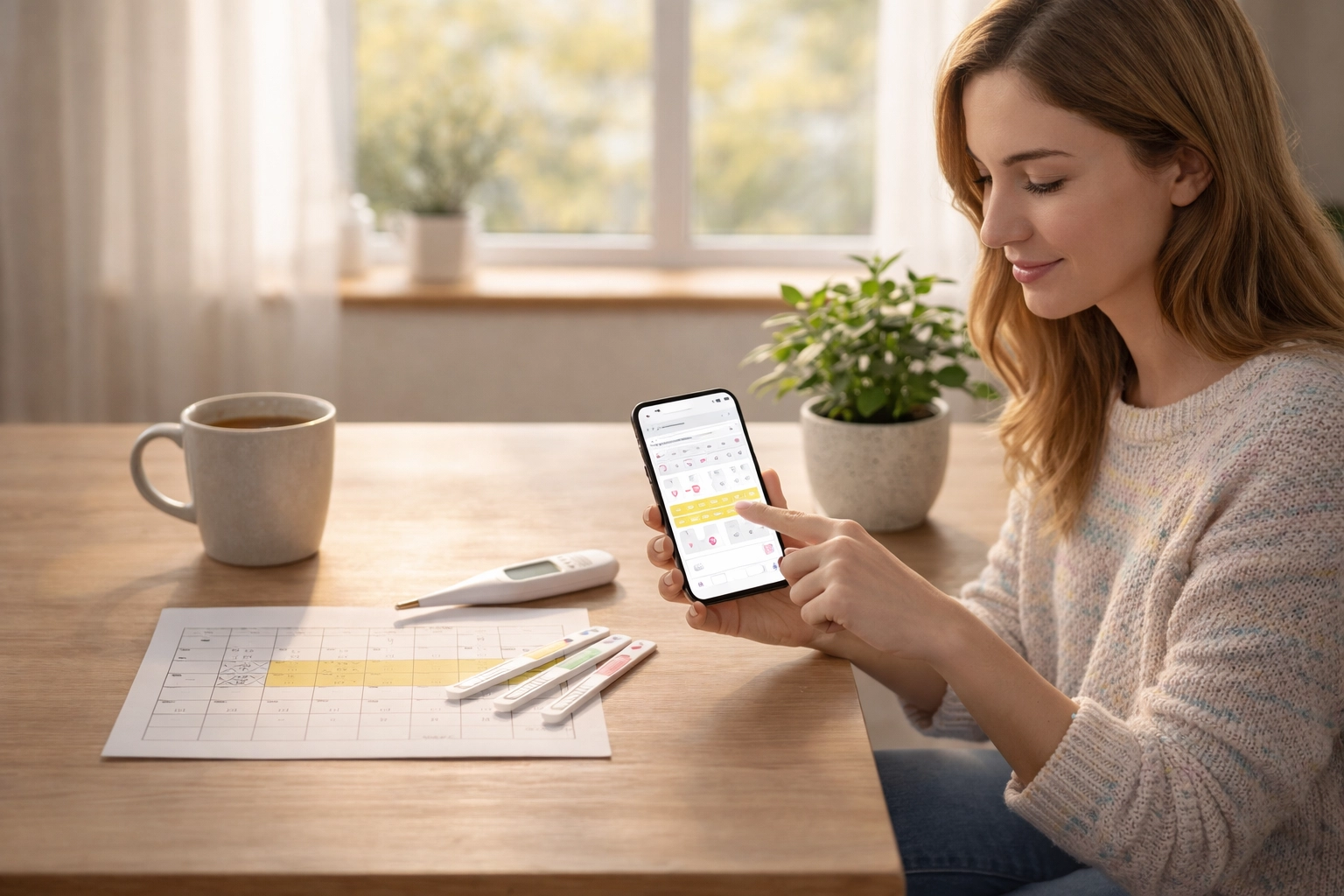
Cycletrack helps you log the signals your body already gives you: period days, symptoms, cervical fluid changes, and optional temperature notes. Over time, these logs can help you spot patterns in a way that a simple calendar cannot.
What exactly is the fertile window?
The fertile window is the set of days in a cycle when pregnancy is most likely if you have unprotected sex. It is often described as:
- Up to 5 days before ovulation (because sperm can live for days),
- Ovulation day (when the egg is released),
- Sometimes the day after (because the egg may remain viable for about a day).
This means that “I only need to track the exact day” is a common misunderstanding. A better goal is to identify a window, then narrow it down with your own signs.
Why calendar predictions can be wrong
Many people learn the rule “ovulation happens on day 14.” That is only true for a perfectly regular 28-day cycle. In real life, cycles vary and the timing of ovulation can shift with stress, travel, illness, changes in sleep, intense training, and more.
A more useful idea is this: ovulation often happens around 12 to 16 days before the next period starts. The second half of the cycle (luteal phase) tends to be more stable than the first half, but it can still vary from person to person and from month to month.
If your cycle length changes, the “counting method” will move ovulation around a lot. This is where tracking body signs becomes valuable.
Signs of ovulation worth tracking
Not everyone feels ovulation, but many people notice at least one of these signals. The more signals you log, the easier it becomes to recognize your own pattern.
- Cervical mucus: often becomes wetter, clearer, and more stretchy near fertile days.
- LH tests (ovulation strips): can show a hormone surge that usually happens shortly before ovulation.
- Basal body temperature (BBT): typically rises after ovulation and stays higher until your next period.
- Ovulation pain (mittelschmerz): one-sided lower abdominal discomfort around mid-cycle for some people.
- Libido or energy changes: some people feel more energetic or notice mood shifts near mid-cycle.
Important: one sign alone is rarely perfect. A calendar estimate plus one sign is better. A calendar estimate plus several signs is best.
What to log in Cycletrack for better ovulation insights
To build a clear picture, start with these basics, then add detail only if it feels helpful (consistency beats perfection):
- Period start and end: the anchor that makes everything else easier to interpret.
- Flow level: light, medium, heavy; spotting is also useful to track.
- Symptoms: cramps, headache, breast tenderness, acne, bloating, mood, sleep changes.
- Discharge notes: dry / sticky / creamy / egg-white (your own words are fine).
- Optional fertility inputs: LH test result, BBT note, intercourse (if you want to track it).
Over time you can compare cycles and see whether your fertile window tends to be early, mid, or late.
Practical tips (trying to conceive)
- Aim for a window, not a single day: having sex every 1 to 2 days during fertile days can reduce pressure and guessing.
- Start a little early: if your cycles vary, begin watching for fertile signs earlier than your “average.”
- Do not over-interpret one month: look for patterns across at least 3 cycles.
- Take notes when life changes: travel, sickness, major stress, and new training plans can shift timing.
If you are tracking to avoid pregnancy
Cycle tracking can teach you a lot about your body, but it is not automatically reliable as contraception. If you are trying to avoid pregnancy, consider using barrier protection and talk to a clinician about methods that match your goals and health history.
Note: this content is educational and not a substitute for medical advice.
Get Cycletrack
Private, simple cycle tracking — free, no ads.
— MIRO PERDOCH, creator of Cycletrack
Support Cycletrack (optional)
If Cycletrack is useful to you, you can support the project with a donation. Donations help me keep the app free, maintain it long-term, and continue writing educational articles that help users understand their cycle and related conditions.
→ Support Cycletrack by donation