Endometriosis & Pain Tracking: A Practical Symptom Diary That Helps You Get Care
Pain is data — and tracking helps you be taken seriously
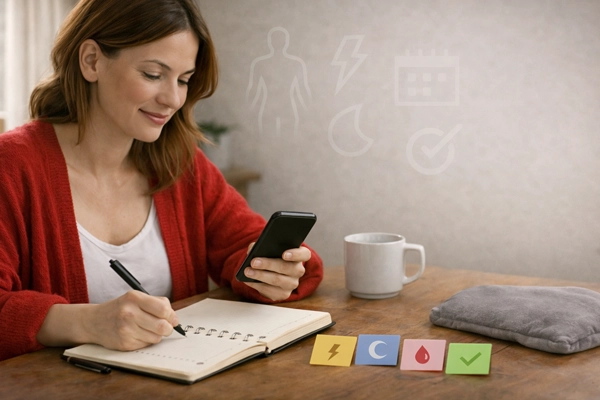
If you live with painful periods or pelvic pain, you may have been told to “just manage it.” A symptom diary turns vague pain into clear patterns that can improve care and support.
Endometriosis is a condition where tissue similar to the uterine lining grows outside the uterus. Symptoms vary widely: some people have severe pain, others have subtle symptoms, and many experience years of uncertainty before getting answers.
Tracking doesn’t diagnose endometriosis — but it can help you and your clinician recognize patterns, rule out other causes, and choose the next steps more confidently.
Common symptoms worth tracking
Endometriosis can show up as more than “bad cramps.” People may experience:
- Painful periods: cramps that are severe, worsening over time, or not relieved by usual methods.
- Pelvic pain outside your period: aching, stabbing, or pressure-like pain.
- Pain during or after sex: deep pelvic pain, burning, or lingering soreness.
- Bowel or bladder symptoms: pain when you pee or poo, constipation/diarrhea that flares around your period.
- Fatigue: “heavy exhaustion” that affects work, school, or recovery.
- Heavy bleeding or spotting: especially if it affects daily life.
- Fertility concerns: difficulty getting pregnant can be part of the picture for some people.
The goal is not to label every sensation — it’s to capture enough detail to see whether symptoms are cyclical, what triggers them, and how they affect daily function.
Why a pain diary helps (especially with appointments)
Many pelvic pain conditions share overlapping symptoms. A good diary helps a clinician understand:
- Timing: is pain linked to your cycle, ovulation, bowel movements, sex, stress, or certain foods?
- Severity: does it stop you from working, sleeping, walking, or concentrating?
- Response: what makes it better or worse (medications, heat, movement, rest)?
- Trajectory: is it stable, improving, or worsening over months?
Without notes, it’s hard to remember details under pressure. With notes, you can show a clear timeline.
What to log (a simple checklist)
If you want a diary that actually helps, focus on these items. You can track them in Cycletrack’s daily logs:
- Pain location: lower abdomen, left/right pelvis, lower back, legs, rectal pain, bladder area.
- Pain type: cramping, stabbing, burning, pressure, pulling, “electric.”
- Pain score: 0-10 (and add a note like “couldn’t stand up” or “missed work”).
- Bleeding: flow level, spotting, clots (if relevant), and duration.
- Bowel/bladder: constipation/diarrhea, pain with toilet, bloating, nausea.
- Sex-related pain: during/after sex, how long it lasted, what helped.
- Fatigue & sleep: hours slept, quality, naps, “crash” days.
- Medication & relief: what you took, dose/time, and whether it worked.
Keep it realistic: you don’t have to log everything every day. Even 60 seconds a day can build a powerful record.
Track triggers (without blaming yourself)
Triggers are not “your fault.” They are clues. A few common triggers to note:
- Cycle timing: pre-period, during period, ovulation window, late luteal phase.
- Stress & sleep disruption: poor sleep, intense work week, travel.
- Movement: long standing, heavy lifting, intense workouts (or sometimes inactivity).
- Food & digestion: constipation days, bloating, foods that consistently worsen symptoms for you.
- Sex: certain positions or timing in the cycle.
After a few weeks, you may notice a pattern like “pain spikes 1-2 days before bleeding starts” or “ovulation week is the hardest.” That insight can guide next steps.
Measure impact: the part doctors need to know
Severity isn’t only “how much it hurts.” Impact matters. Add quick notes like:
- Work/school: missed day, reduced productivity, couldn’t sit/stand.
- Sleep: woke from pain, couldn’t fall asleep.
- Movement: couldn’t walk normally, needed to lie down.
- Relationships: avoided sex, avoided social plans, mood impact.
This is often the information that changes how seriously symptoms are assessed.
When to seek medical advice
Consider talking to a healthcare professional if painful periods affect your day-to-day life, pain is worsening over time, you have pain during sex, or you notice bowel/bladder pain that clusters around your period. If you are trying to conceive and have persistent pelvic pain, earlier support can be helpful.
Bring your logs. Even a one-month snapshot can improve the quality of the conversation.
Why Cycletrack is useful for pain tracking
- Symptom-first tracking: pain, bleeding, fatigue, and notes in one place.
- Private by design: sensitive health data stays on your device unless you choose to sync.
- Offline-first: log pain immediately anywhere — no signal required.
Note: this content is educational and not a substitute for medical advice.
Get Cycletrack
Private, simple cycle tracking — free, no ads.
— MIRO PERDOCH, creator of Cycletrack
Support Cycletrack (optional)
If Cycletrack is useful to you, you can support the project with a donation. Donations help me keep the app free, maintain it long-term, and continue writing educational articles that help users understand their cycle and related conditions.
→ Support Cycletrack by donation